--------
More tips about learning Chinese
http://hellolearnchinese.com
2019年6月19日星期三

2019年5月23日星期四
20 Practical Chinese Verbs You Need to Learn
It will only take 9 minutes to read this post!
If you don’t have time to read this post now, just download 20 Practical Chinese Verbs You Need to Learn and read it later!
We have already looked at some Chinese greetings and farewells as well as some phrases for beginners. Now it’s time to focus on learning some simple verbs and starting to construct basic sentences. You may notice that sometimes the Chinese character has more than one meaning, but for the purpose of this post, we have chosen the most frequently used or most relevant verb for a beginner of Chinese. If you haven’t already, it’s a good time to take a look at some of the Chinese characters and try to remember what they look like.
You can create a mnemonic or story to help you remember their meaning, pronunciation and even tone. If you think of a good mnemonic, share it with your fellow Chinese learners on the character page within our Online Dictionary. The story you create to remember a character can be very simple, like the one I use to remember the character 要 or more complex like the one below.
You can see this example by visiting the page for the character 量.

Don’t forget to click on the red linked Chinese characters to listen to the pronunciation, watch how to write the character and view the characters radicals, pinyin and example sentences. You can also toggle between simplified and traditional characters!
Below is a list of 20 Chinese verbs with example sentences for you to learn. In Chinese, most simple sentences, like the ones below, follow this sentence pattern:
Subject + verb phrase + object
You can learn about different sentence patterns in our article about Chinese Sentence Structures.
1. to want 要 (yào)

The original meaning of this character was ‘waist’ 腰 (yāo), and depicts a woman 女 (nǚ) pointing to her midsection 西 (xī).
I want an apple. 我要一个苹果。(wǒ yào yī gè píng guǒ.)
2. to eat 吃 (chī)

The character 吃 (chī) has the mouth 口 (kǒu) radical, and the character 乞 (qǐ) meaning to beg. This right side of the character provides the pronunciation of the character (qǐ –>chī).
I am eating noodles. 我在吃面。 (wǒ zài chī miàn.)
3. To drink 喝 (hē)

The 喝 (hē) character features the mouth 口 (kǒu) radical to the left. On the top right-hand side is the sun 日 (rì), underneath there is a man 人 (rén) leaning against an object and sitting in the shade. This suggests that a person might drink something when taking a rest from working in the sun.
I drink tea. 我喝茶。(wǒ hē chá.)
4. To take 拿 (ná)

The 拿 (ná) character depicts a hand 手 (shǒu) on the bottom of the character, whilst on the top is the character for unity 合 (hé). If you take something into your hand then you have unity and togetherness.
Please take the book 请拿上这本书。(qǐng ná shàng zhè běn shū.)
5. To give 给 (gěi)

The radical on the left side of the character 给 (gěi) is silk 丝 (sī), traditionally given as a present. Combined with the character for unity 合 (hé) suggests happiness when giving something.
Please give me… 请给我…(qǐng gěi wǒ…)
6. To open 打开/开 (dǎ kāi / kāi)

It’s easier to look at the traditional character (開) of 开 (kāi) to understand why it looks the way it does. Once surrounded by a door 門 (mén), the 开 represented two hands removing a bolt or bar from the door in order to open it.
Open the door 开门 (kāi mén)
7. To have 有 (yǒu)

Originally, the top part of the 有 (yǒu) character resembled a hand 手 (shǒu) and the bottom radical looked more like meat 肉 (ròu). Now, man has forgotten about meat and strives to possess or have the moon 月 (yuè), which now makes up the bottom of the character.
I have a younger brother. 我有一个弟弟。(wǒ yǒu yī gè dì di.)
8. To know 知道 (zhī dao)

The character 知 (zhī) is shown as an arrow 矢 (shǐ) and a mouth 口 (kǒu) which represents knowledge. The idea is that a person with knowledge speaks 口 (kǒu) with the precision of an arrow 矢 (shǐ).
I know. 我知道。(wǒ zhī dao)
9. To like 喜欢 (xǐ huan)

The 喜 (xǐ) character represents happiness which is often expressed with music and singing. The top half of the character depicts a drum on its stand and a hand striking it.
I like her. 我喜欢她。 (wǒ xǐ huan tā)
10. To love 爱 (ài)

The simplified character of 爱 (ài) is made up of three parts: ‘breathe’ , ‘hand’ and ‘co-operation’. It suggests that love is more about friendship which is represented by the hand 手 (shǒu) than by the heart 心 (xīn) which is seen in the traditional character of love 愛 (ài) .
I love him 我爱他。(wǒ ài tā)
11. To be 是 (shì)/ 成为 (chéng wéi)

In Chinese the character 是 (shì), not only means ‘to be’, but can also sometimes be used to say ‘yes’ or ‘correct’. 是 (shì) shows the sun 日 (rì) over the character for ‘exact’, 正 (zhèng). The meaning is that the sun is precisely on the meridian line and therefore a standard of correctness.
I am a teacher. 我是一个老师。(wǒ shì yī gè lǎo shī.)
12. To Do/Make 做 (zuò)

The character 做 (zuò) shows a man 人 (rén) causing 故 (gù) an effect by doing something.
I make dinner every day. 每天我都做晚饭。(měi tiān wǒ dōu zuò wǎn fàn.)
13. To Sit 坐 (zuò)

The character 坐 (zuò) is a pictograph depicting two men 人 (rén) 人 sitting on the ground 土 (tǔ) facing each other.
I usually sit there when I go to the library. 当我去图书馆我习惯坐那里。 (dāng wǒ qù tú shū guǎn wǒ xí guàn zuò nà li.)
14. To See 看 (kàn)

The character 看 (kàn) depicts a hand 手 (shǒu) covering the eyes 目 (mù) as it looks at the sun.
I like to watch movies. 我喜欢看电影。(wǒ xǐ huan kàn diàn yǐng.)
15. To Go 去 (qù)

去 (qù) is a pictograph of an empty vessel 厶 (sī), say a bowl or pot and it’s cover, represented by the 土 (tǔ). Once the lid is taken off, the contents of the vessel are ready to ‘go’.
I go to Beijing often. 我经常去北京。(wǒ jīng cháng qù běi jīng.)
16. To Use 用 (yòng)

The original form of the 用 (yòng) character was a water bucket 桶 (tǒng). The character 用 (yòng) takes its pronunciation from the 桶 (tǒng) character.
I use my mobile phone too much. 我用手机的频率太高了。(wǒ yòng shǒu jī de pín lǜ tài gāo le)
17. To Find 找 (zhǎo)

The 找 (zhǎo) character is made of a hand 手 (shǒu) and a spear 戈 (gē) suggesting a time when food needed to be found.
I can find the book. 我可以找到那本书。(wǒ kě yǐ zhǎo dào nà běn shū.)
18. To tell 告诉 (gào su)

The second character 诉 (sù) features the ‘speech radical’ 讠 (yán) and the character 斥 (chì) meaning ‘to reprimand’.
Tell me his phone number 告诉我他的电话号码。(gào su wǒ tā de diàn huà hào mǎ.)
19. To Ask 问 (wèn)

The 问 (wèn) character shows a door 门 (mén) surrounding a mouth 口 (kǒu). As many introductions would occur in the entrance to a house in Chinese culture, it would be a place where neighbours would ask or inquire about the family inside.
Please ask your friend. 请问你的朋友。(qǐng wèn nǐ de péng you.)
20. To Think 想 (xiǎng) /觉得 (jué de)

The character 想 (xiǎng) is composed of three parts: the tree 木 (mù), the eye 目 (mù) and the heart 心 (xīn). An interpretation of the character is that the eye is behind the tree looking out for or inspecting for possible danger. The heart in Chinese culture often represents both heart and mind, and suggests the examination of the heart or to think or ponder.
I think it’s strange. 我觉得很奇怪。 (wǒ jué de hěn qí guài.)
If you have any questions or comments about our article on Chinese verbs, please leave them below.
If you’re interested in learning Chinese, you can check out our Written Chinese Dictionary! You can learn more about our Chinese Learning Toolkit here! You can also click on the links below to download it for your iOS and Android devices!



The post 20 Practical Chinese Verbs You Need to Learn appeared first on Written Chinese.
from Written Chinese http://bit.ly/2VLcc8J
--------
More tips about learning Chinese
http://hellolearnchinese.com
2019年4月29日星期一
2019年1月5日星期六
Learn How to Play Chinese Chess
To learn how to play Chinese chess you can watch Allen teach Mike in this video below!
Written by Mike Michelini
Playing Chinese Chess is a fun way to understand Chinese culture a bit as well as practice some new Chinese characters. My first time playing I was thinking about the old times in Chinese wars thousands of years ago, this game helps you visualize it. Let’s look into how this traditional Chinese game works.
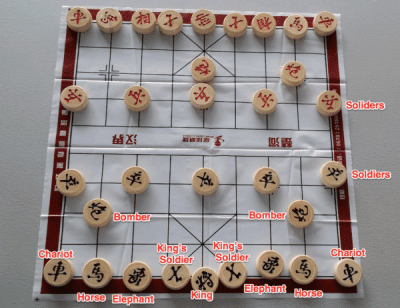
Pieces of the game
Chinese chess, also known as 象棋 (xiàng qí) has some similar pieces as chess, you will have one board (or mat) to put the pieces on and 32 Player’s pieces (16 for each side). Here are the number of pieces for each side:
Offense Characters:
10 Soldiers (5 for each side) [Red and black characters don’t match]
4 Bombers (2 for each side)
4 Horses (2 for each side)
4 Chariots (2 for each side)
Defense Characters:
4 Elephants (2 for each side) [Red and black characters don’t match]
4 King’s soldier (2 defensive soldiers for each side)
*2 Kings (1 King for each side) [Red and Black characters don’t match]
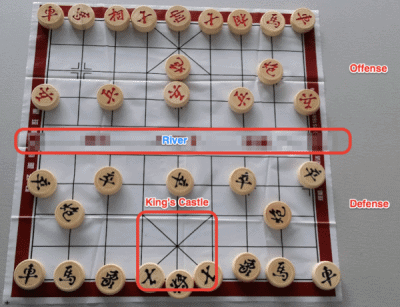
How the Characters Move
So how do these pieces move along the board? Let’s go down the list.
Offense Pieces
Offense can move across the river, while the defensive pieces (covered below) cannot cross and must stay near the king to protect him.
- Soldiers – Similar to a pawn in chess, these are the “fodder” at the front lines of the army. 5 across closest to the river, they can only move forward or backward 1 space at a time. Once they cross the river though, they can move left and right as well as forward and backward.
- Bombers – I think of these as cannon brigade. They can kill anything in their line of sight (looking straight ahead) but the catch is that there needs to be a piece between them and their target. This piece in between the bomber and his target can be either your piece or your enemy’s piece. Please note the distance doesn’t matter, the bomber can move across the board.
- Horses – These are the same as a knight in chess. They can move in an ‘L’ shape, one forward and two left or right (or the inverse).
- Chariots – The most powerful piece in the game. In some ways like the queen in chess, except it can only move vertically or horizontally, it cannot cross the board diagonally. So the chariot can cross the whole board and kill its target, no questions asked. The difference with the chariot and the bomber is the bomber has to have a piece in between it and its target, where the chariot simply goes straight for the kill.
Defensive Pieces
These pieces are stuck on your side of the board, and cannot pass the river. The elephant can move anywhere on your side of the board, but the king’s soldiers and the king cannot leave the castle.
- Elephants – These can make one extra space more than the horse (or knight), going in a two by two direction. So the elephant moves to forward (or backward) and two left (or right). But the big difference is this elephant cannot cross the river and needs to stay on your defense.
- King’s soldier – This soldier’s job is to stay in the castle and protect the king. He cannot leave the castle, but can move in any direction two spaces, vertically, horizontally, or diagonally. I imagine in a real-life battle, these are the specially trained warriors with big shields and constantly circling the king when there is an attack.
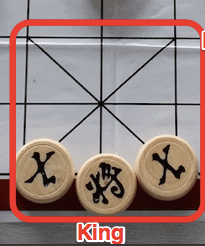
- King – Same as chess, can only move in 1 space in any direction. But the difference with chess is he cannot leave his castle, which is a two by two box in the back center on your side of the board. If he dies, you lose the game. There isn’t a check or checkmate, it is simply the king is killed or not.
The Board (Battlefield)
The board is a square mat that is 8 boxes by 8 boxes. So each side has 4 boxes, and in the middle of the board is the river. The river is what separates the offensive pieces from the defensive pieces (we covered above) ensuring that you keep certain pieces on your side of the board.
The five soldiers are spread out evenly towards the front of your side of the board. Behind them are the two bombers, and then the back row has the king in the middle, with the king’s soldiers on his sides, then 2 elephants, 2 horses, and 2 chariots (on alternating sides).
Note the castle is in the back center of the board on each player’s side, this is where the king and king’s soldiers must remain for the entire game. Its a two by two square area and there are diagonal lines showing that those pieces can move diagonally within the castle.
Playing the Game
The game starts with red making the first move. Each side makes its own move, even if one side makes a kill or not, it keeps alternating. Each player has three minutes to make his or her move.
Winning the Game
To win the game, the first person to kill the opponent’s king wins. There is no check or checkmate like in chess, it is going straight for the kill.
Variations of Play
The classic way to play is where each player has 3 minutes each move but this can take a long time, especially as the pieces move and the board becomes so complex. It can take many hours to finish one match.
Therefore, there is a faster way to play, where there are 10 minutes total game length, and then the game is over.
In Summary
I am excited to have learned the game of Chinese chess, and I hope you did too! I envision a living battle with knights, chariots, cannons, and even massive elephants protecting the castle!
We will continually update this post as we get other people’s variations of play and more clarifications on the rules. I am sure after all these years of Chinese history there have formed multiple formats of Chinese chess! This one I learned from one of our WrittenChinese.com’s team members – Allen, he learned this when he was a young boy and got quite good at it.
The post Learn How to Play Chinese Chess appeared first on Written Chinese.
from Written Chinese http://bit.ly/2FeS6yS
--------
More tips about learning Chinese
http://hellolearnchinese.com
2019年1月1日星期二
TWCC137 – Sex Ed, Fertility, and IVF, Episode 137
This week, our topic has been influenced by several questions relating to having families in China.
If you want to ask us a question just go to our voicemail page and leave us your question!
In This Episode, We Talk About…
- Nora’s fact about China: China Creates World’s First Gene-edited Babies
- Hollie’s news: Hundreds of runners caught cheating at Shenzhen half-marathon by taking shortcut through bushes
- Sex Education in China
- Teen pregnancies
- Fertility and IVF
- TCM and fertility
- Family pressure and DINK couples
- “Fertility desire“
- Our word of the week is ‘child’ 孩子 (hái zi)
- You can now support us on Patreon!
- Check out our new ‘Ultimate Packing List for China‘ (contains affiliate links)
- DON’T FORGET TO CLAIM YOUR FREE WRITTEN CHINESE DICTIONARY FLASHCARDS! Use the promo code ‘twowhitechicks’ for your free set of dating flashcards. Read these instructions to claim your Chinese flashcards!
- If you have a question for us, please send us a voicemail or leave us a message below!
People and Companies We Mentioned in the Show
- Written Chinese is our sponsor
- To learn more Chinese words, you can try out our Online Dictionary, or alternatively, you can check out our Written Chinese Dictionary app!
- Send us a Voicemail!
- Visit us and give us a ‘like’ on our Two White Chicks Facebook page!
- Support us on Patreon!
Episode Length 00:49:23
- Thanks so much for tuning in. Join us again next week for our next topic and another question from one of our listeners!
If you want to ask us a question you can Send us a Voicemail!
Download Options
- Direct Download: Right-click here and click “Save As” for a direct download
- iTunes: Listen and subscribe on iTunes for free!
- Or download to your Android device using Stitcher
- Download the Chinese app 荔枝FM (Lizhi FM) and search for Two White Chicks in China or FM854237. Follow the instructions for using Lizhi here.
- If you enjoyed this episode, leave a positive review on iTunes!
- Alternatively, you can leave us a comment below!
- Thanks for listening, guys!
– Hollie & Nora

The post TWCC137 – Sex Ed, Fertility, and IVF, Episode 137 appeared first on Written Chinese.
from Written Chinese http://bit.ly/2RoMlFC
--------
More tips about learning Chinese
http://hellolearnchinese.com
2018年12月3日星期一
TWCC136 – China’s Work-Life Balance, Episode 136
This week, our topic comes from Taylor, who asks us about a work-life balance in China and what the average workweek is like.
If you want to ask us a question just go to our voicemail page and leave us your question!
In This Episode, We Talk About…
- Nora’s fact about China: China Creates World’s First Gene-edited Babies
- Hollie’s news: China’s first driverless taxis are now being tested out!
- The 996 average work week
- Hard work and long hours compared with the West
- Foreigners work/life balance in China
- China Will Have a 4-day Workweek by 2030
- Our word of the week is ‘to balance’ 兼顾 (jiān gù)
- You can now support us on Patreon!
- Check out our new ‘Ultimate Packing List for China‘ (contains affiliate links)
- DON’T FORGET TO CLAIM YOUR FREE WRITTEN CHINESE DICTIONARY FLASHCARDS! Use the promo code ‘twowhitechicks’ for your free set of dating flashcards. Read these instructions to claim your Chinese flashcards!
- If you have a question for us, please send us a voicemail or leave us a message below!
People and Companies We Mentioned in the Show
- Written Chinese is our sponsor
- To learn more Chinese words, you can try out our Online Dictionary, or alternatively, you can check out our Written Chinese Dictionary app!
- Send us a Voicemail!
- Visit us and give us a ‘like’ on our Two White Chicks Facebook page!
- Support us on Patreon!
Episode Length 00:46:09
- Thanks so much for tuning in. Join us again next week for our next topic and another question from one of our listeners!
If you want to ask us a question you can Send us a Voicemail!
Download Options
- Direct Download: Right-click here and click “Save As” for a direct download
- iTunes: Listen and subscribe on iTunes for free!
- Or download to your Android device using Stitcher
- Download the Chinese app 荔枝FM (Lizhi FM) and search for Two White Chicks in China or FM854237. Follow the instructions for using Lizhi here.
- If you enjoyed this episode, leave a positive review on iTunes!
- Alternatively, you can leave us a comment below!
- Thanks for listening, guys!
– Hollie & Nora
The post TWCC136 – China’s Work-Life Balance, Episode 136 appeared first on Written Chinese.
from Written Chinese https://ift.tt/2SsudHv
--------
More tips about learning Chinese
http://hellolearnchinese.com
2018年11月25日星期日
TWCC135 – The Charity and NGO Scene in China, Episode 135
This week, our topic comes from Antonina, who asks us about charities and NGOs in China.
If you want to ask us a question just go to our voicemail page and leave us your question!
In This Episode, We Talk About…
- Hollie’s news: Woman Eats Instant Ramen for 3 Weeks to Save up For Singles Day
- We interview Ronny, a local businessman and chairman of the charity, A Heart For China
- A Heart for China official WeChat account ID: AHFC
- Visit Chestnut 1984 if you’re in Shenzhen!


- Our word of the week is ‘charity’ 慈善机构 (cí shàn jī gòu)
- You can now support us on Patreon!
- Check out our new ‘Ultimate Packing List for China‘ (contains affiliate links)
- DON’T FORGET TO CLAIM YOUR FREE WRITTEN CHINESE DICTIONARY FLASHCARDS! Use the promo code ‘twowhitechicks’ for your free set of dating flashcards. Read these instructions to claim your Chinese flashcards!
- If you have a question for us, please send us a voicemail or leave us a message below!
People and Companies We Mentioned in the Show
- Written Chinese is our sponsor
- To learn more Chinese words, you can try out our Online Dictionary, or alternatively, you can check out our Written Chinese Dictionary app!
- Send us a Voicemail!
- Visit us and give us a ‘like’ on our Two White Chicks Facebook page!
- Support us on Patreon!
-
Episode Length 00:25:25
Thanks so much for tuning in. Join us again next week for our next topic and another question from one of our listeners!
If you want to ask us a question you can Send us a Voicemail!Download Options
- Direct Download: Right-click here and click “Save As” for a direct download
- iTunes: Listen and subscribe on iTunes for free!
- Or download to your Android device using Stitcher
- Download the Chinese app 荔枝FM (Lizhi FM) and search for Two White Chicks in China or FM854237. Follow the instructions for using Lizhi here.
- If you enjoyed this episode, leave a positive review on iTunes!
- Alternatively, you can leave us a comment below!
- Thanks for listening, guys!
– Hollie & Nora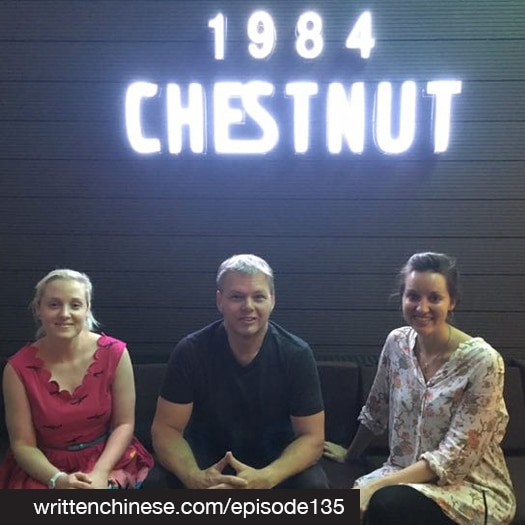
The post TWCC135 – The Charity and NGO Scene in China, Episode 135 appeared first on Written Chinese.
from Written Chinese https://ift.tt/2r4e9jD
--------
More tips about learning Chinese
http://hellolearnchinese.com
2018年11月15日星期四
TWCC134 – An Insider’s Guide to Culture Shock, Episode 134
This week, our topic comes from Hannah, who asks us about culture shock and how to overcome it in China.
If you want to ask us a question just go to our voicemail page and leave us your question!
In This Episode, We Talk About…
- Nora’s fact about China: The World’s Largest Airport opening in Beijing
- Hollie’s news: “Flaunt Your Wealth” Challenge goes viral in China
- Some things that might cause “culture shock” in China
- Ways we’ve overcome some daily ‘aggravations’
- How to just get on with it
- Our word of the week is ‘culture shock’ 文化冲击 (wén huà chōng jī)
- You can now support us on Patreon!
- Check out our new ‘Ultimate Packing List for China‘ (contains affiliate links)
- DON’T FORGET TO CLAIM YOUR FREE WRITTEN CHINESE DICTIONARY FLASHCARDS! Use the promo code ‘twowhitechicks’ for your free set of dating flashcards. Read these instructions to claim your Chinese flashcards!
People and Companies We Mentioned in the Show
- Written Chinese is our sponsor
- To learn more Chinese words, you can try out our Online Dictionary, or alternatively, you can check out our Written Chinese Dictionary app!
- Send us a Voicemail!
- Visit us and give us a ‘like’ on our Two White Chicks Facebook page!
- Support us on Patreon!
Episode Length 00:38:38
- Thanks so much for tuning in. Join us again next week for our next topic and another question from one of our listeners!
- If you want to ask us a question you can Send us a Voicemail!
Download Options
- Direct Download: Right-click here and click “Save As” for a direct download
- iTunes: Listen and subscribe on iTunes for free!
- Or download to your Android device using Stitcher
- Download the Chinese app 荔枝FM (Lizhi FM) and search for Two White Chicks in China or FM854237. Follow the instructions for using Lizhi here.
- If you enjoyed this episode, leave a positive review on iTunes!
- Alternatively, you can leave us a comment below!
- Thanks for listening, guys!
– Hollie & Nora
The post TWCC134 – An Insider’s Guide to Culture Shock, Episode 134 appeared first on Written Chinese.
from Written Chinese https://ift.tt/2DJUrC0
--------
More tips about learning Chinese
http://hellolearnchinese.com
2018年11月8日星期四
TWCC133 – Ancient and Modern Chinese Sports, Episode 133
This week, our topic comes from Edward, who asks us about sports in China.
If you want to ask us a question just go to our voicemail page and leave us your question!
In This Episode, We Talk About…
- Nora’s fact about China: For the love of Durian!
- Naked woman statue has nudity restored after being covered up
- Football and the World Cup in China
- Basketball and its history
- Popular sports in modern China
- Ancient Chinese sports
- There’s lots to read about on Wikipedia’s Sport in China page
- Our word of the week is ‘competition’ 比赛 (bǐ sài)
- You can now support us on Patreon!
- Check out our new ‘Ultimate Packing List for China‘ (contains affiliate links)
- DON’T FORGET TO CLAIM YOUR FREE WRITTEN CHINESE DICTIONARY FLASHCARDS! Use the promo code ‘twowhitechicks’ for your free set of dating flashcards. Read these instructions to claim your Chinese flashcards!
- If you have a question for us, please send us a voicemail or leave us a message below!
People and Companies We Mentioned in the Show
- Written Chinese is our sponsor
- To learn more Chinese words, you can try out our Online Dictionary, or alternatively, you can check out our Written Chinese Dictionary app!
- Send us a Voicemail!
- Visit us and give us a ‘like’ on our Two White Chicks Facebook page!
- Support us on Patreon!
-
Episode Length 00:33:02
Thanks so much for tuning in. Join us again next week for our next topic and another question from one of our listeners!
If you want to ask us a question you can Send us a Voicemail!Download Options
- Direct Download: Right-click here and click “Save As” for a direct download
- iTunes: Listen and subscribe on iTunes for free!
- Or download to your Android device using Stitcher
- Download the Chinese app 荔枝FM (Lizhi FM) and search for Two White Chicks in China or FM854237. Follow the instructions for using Lizhi here.
- If you enjoyed this episode, leave a positive review on iTunes!
- Alternatively, you can leave us a comment below!
- Thanks for listening, guys!
– Hollie & Nora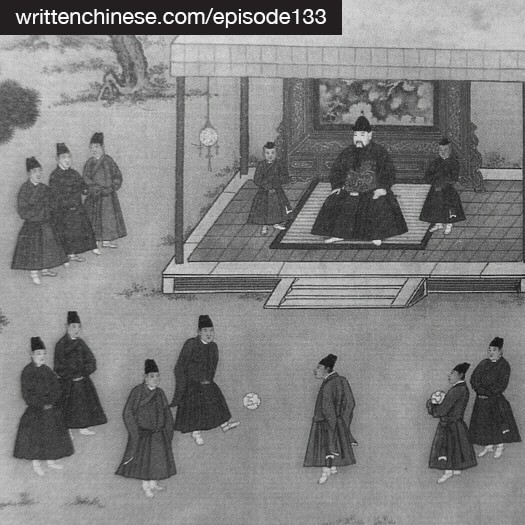
The post TWCC133 – Ancient and Modern Chinese Sports, Episode 133 appeared first on Written Chinese.
from Written Chinese https://ift.tt/2Dymg0a
--------
More tips about learning Chinese
http://hellolearnchinese.com
2018年11月1日星期四
TWCC132 – Chinese vs. Western Homes, Episode 132
This week, our topic comes from Cathy, who asks us to talk about apartments in China and how they differ from homes in the West.
If you want to ask us a question just go to our voicemail page and leave us your question!
In This Episode, We Talk About…
- Nora’s fact: Chinese to live longer than Americans by 2040
- Shenzhen’s light show:
- Shenzhen becomes national forest city
- Dormitories and shared living
- Chinese ‘walkups’ and traditional Chinese apartments
- ‘Wealthy’ Chinese homes
- Appliances and alternatives
- Our word of the week is ‘fridge’ 冰箱 (bīng xiāng)
- You can now support us on Patreon!
- Check out our new ‘Ultimate Packing List for China‘ (contains affiliate links)
- DON’T FORGET TO CLAIM YOUR FREE WRITTEN CHINESE DICTIONARY FLASHCARDS! Use the promo code ‘twowhitechicks’ for your free set of dating flashcards. Read these instructions to claim your Chinese flashcards!
- If you have a question for us, please send us a voicemail or leave us a message below!
People and Companies We Mentioned in the Show
- Written Chinese is our sponsor
- To learn more Chinese words, you can try out our Online Dictionary, or alternatively, you can check out our Written Chinese Dictionary app!
- Send us a Voicemail!
- Visit us and give us a ‘like’ on our Two White Chicks Facebook page!
- Support us on Patreon!
-
Episode Length 01:05:53
Thanks so much for tuning in. Join us again next week for our next topic and another question from one of our listeners!
If you want to ask us a question you can Send us a Voicemail!Download Options
- Direct Download: Right-click here and click “Save As” for a direct download
- iTunes: Listen and subscribe on iTunes for free!
- Or download to your Android device using Stitcher
- Download the Chinese app 荔枝FM (Lizhi FM) and search for Two White Chicks in China or FM854237. Follow the instructions for using Lizhi here.
- If you enjoyed this episode, leave a positive review on iTunes!
- Alternatively, you can leave us a comment below!
- Thanks for listening, guys!
– Hollie & Nora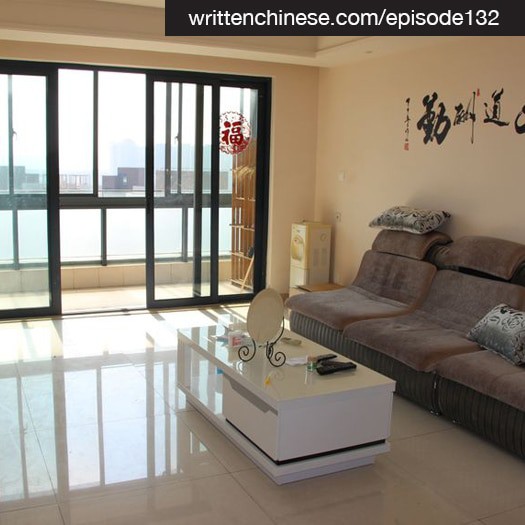
The post TWCC132 – Chinese vs. Western Homes, Episode 132 appeared first on Written Chinese.
from Written Chinese https://ift.tt/2JwDXNV
--------
More tips about learning Chinese
http://hellolearnchinese.com
2018年10月25日星期四
TWCC131 – Electronic Opium, Episode 131
This week, our topic comes from Christian, who asks us to discuss ‘cell phone addiction’ in China after watching this video.
If you want to ask us a question just go to our voicemail page and leave us your question!
In This Episode, We Talk About…
- Nora’s fact about Jaywalkers in Shenzhen now Under Surveillance
- Chinese fugitive turns himself in after 26 years because he can’t afford medical bills
- Some info on ‘internet addiction’
- Most internet addicted countries
- Hong Kong and its cell phone ‘addiction’
- ‘Addiction’ boot camps
- Other instances of the dangers of cell phone use
- Our word of the week is ‘addiction’ 成瘾 (chéng yǐn)
- You can now support us on Patreon!
- Check out our new ‘Ultimate Packing List for China‘ (contains affiliate links)
- DON’T FORGET TO CLAIM YOUR FREE WRITTEN CHINESE DICTIONARY FLASHCARDS! Use the promo code ‘twowhitechicks’ for your free set of dating flashcards. Read these instructions to claim your Chinese flashcards!
- If you have a question for us, please send us a voicemail or leave us a message below!
People and Companies We Mentioned in the Show
- Written Chinese is our sponsor
- To learn more Chinese words, you can try out our Online Dictionary, or alternatively, you can check out our Written Chinese Dictionary app!
- Send us a Voicemail!
- Visit us and give us a ‘like’ on our Two White Chicks Facebook page!
- Support us on Patreon!
-
Episode Length 00:30:01
Thanks so much for tuning in. Join us again next week for our next topic and another question from one of our listeners!
If you want to ask us a question you can Send us a Voicemail!Download Options
- Direct Download: Right-click here and click “Save As” for a direct download
- iTunes: Listen and subscribe on iTunes for free!
- Or download to your Android device using Stitcher
- Download the Chinese app 荔枝FM (Lizhi FM) and search for Two White Chicks in China or FM854237. Follow the instructions for using Lizhi here.
- If you enjoyed this episode, leave a positive review on iTunes!
- Alternatively, you can leave us a comment below!
- Thanks for listening, guys!
– Hollie & Nora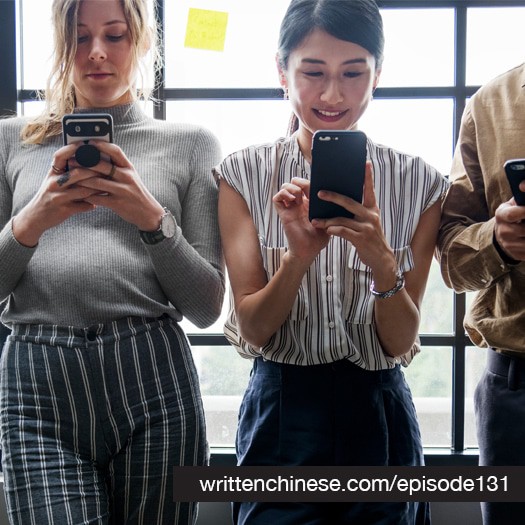
The post TWCC131 – Electronic Opium, Episode 131 appeared first on Written Chinese.
from Written Chinese https://ift.tt/2At3YKY
--------
More tips about learning Chinese
http://hellolearnchinese.com
2018年10月12日星期五
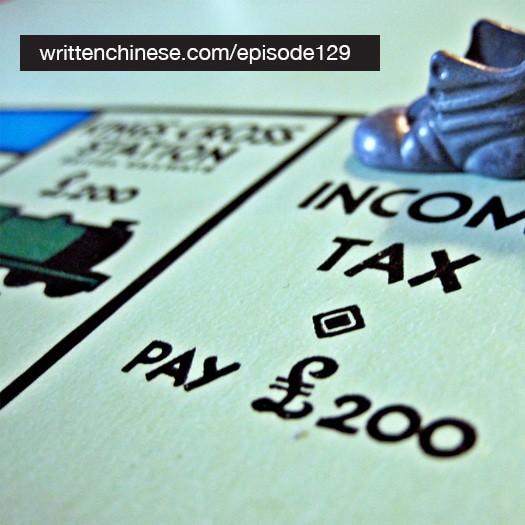
TWCC129 – On Taxes, Banking, and Sending Money Back Home, Episode 129
This week, our question comes from Lisa, who asks us “How do I send money home to the UK, and can I open a bank account in China?”
If you want to ask us a question just go to our voicemail page and leave us your question!
In This Episode, We Talk About…
- Nora’s fact about the Chinese Turtle-smuggling Flight Attendants
- Chinese peeping Tom installed secret cameras to film couples in love hotels and sell footage online
- Some sending money home options
- Untried methods
- Opening a bank account in Hong Kong
- Opening a bank account in China
- Paying tax on income if you’re ‘Merican
- Our word of the week is ‘bank’ 银行 (yín háng)
- You can now support us on Patreon!
- Check out our new ‘Ultimate Packing List for China‘ (contains affiliate links)
- DON’T FORGET TO CLAIM YOUR FREE WRITTEN CHINESE DICTIONARY FLASHCARDS! Use the promo code ‘twowhitechicks’ for your free set of dating flashcards. Read these instructions to claim your Chinese flashcards!
- If you have a question for us, please send us a voicemail or leave us a message below!
People and Companies We Mentioned in the Show
- Written Chinese is our sponsor
- To learn more Chinese words, you can try out our Online Dictionary, or alternatively, you can check out our Written Chinese Dictionary app!
- Send us a Voicemail!
- Visit us and give us a ‘like’ on our Two White Chicks Facebook page!
- Support us on Patreon!
Episode Length 00:40:43
- Thanks so much for tuning in. Join us again next week for our next topic and another question from one of our listeners!
- If you want to ask us a question you can Send us a Voicemail!
Download Options
- Direct Download: Right-click here and click “Save As” for a direct download
- iTunes: Listen and subscribe on iTunes for free!
- Or download to your Android device using Stitcher
- Download the Chinese app 荔枝FM (Lizhi FM) and search for Two White Chicks in China or FM854237. Follow the instructions for using Lizhi here.
- If you enjoyed this episode, leave a positive review on iTunes!
- Alternatively, you can leave us a comment below!
Thanks for listening, guys!
– Hollie & Nora
The post TWCC129 – On Taxes, Banking, and Sending Money Back Home, Episode 129 appeared first on Written Chinese.
from Written Chinese https://ift.tt/2CEpgHT
--------
More tips about learning Chinese
http://hellolearnchinese.com
2018年10月4日星期四
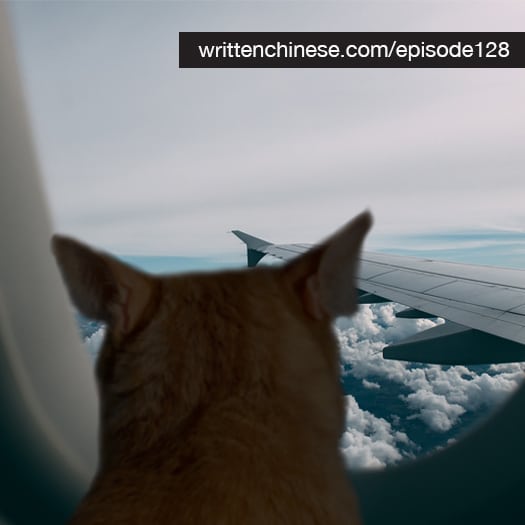
TWCC128 – Listener Spotlight #1: Patrice Has Moved to China, Episode 128
This week, we interview Patrice, who we met up with after she arrived in Shenzhen, China!
If you want to ask us a question just go to our voicemail page and leave us your question!
In This Episode, We Talk About…
-
- Find out how to apply for visa free entry to Hainan Visa
- Nora’s fact about the new grocery chain created by Jack Ma
- Permanent Number: Chinese Mother Tattoos Phone Number on Son’s Arm, Strikes through Old One
- Patrice introduces herself
- Coming to China with her cats
- Her expectations of China and how it’s been different
- Patrice’s article about bringing her cats to China
- Listen to Patrice’s podcast Language Nerds Do Earth!
- Our word of the week is ‘animal’ 动物 (dòng wù)
- You can now support us on Patreon!
- Check out our new ‘Ultimate Packing List for China‘ (contains affiliate links)
- DON’T FORGET TO CLAIM YOUR FREE WRITTEN CHINESE DICTIONARY FLASHCARDS! Use the promo code ‘twowhitechicks’ for your free set of dating flashcards. Read these instructions to claim your Chinese flashcards!
- If you have a question for us, please send us a voicemail or leave us a message below!
People and Companies We Mentioned in the Show
- Written Chinese is our sponsor
- To learn more Chinese words, you can try out our Online Dictionary, or alternatively, you can check out our Written Chinese Dictionary app!
- Send us a Voicemail!
- Visit us and give us a ‘like’ on our Two White Chicks Facebook page!
- Support us on Patreon!
Episode Length 00:25:09
- Thanks so much for tuning in. Join us again next week for our next topic and another question from one of our listeners!
- If you want to ask us a question you can Send us a Voicemail!
Download Options
-
- Direct Download: Right-click here and click “Save As” for a direct download
- iTunes: Listen and subscribe on iTunes for free!
- Or download to your Android device using Stitcher
- Download the Chinese app 荔枝FM (Lizhi FM) and search for Two White Chicks in China or FM854237. Follow the instructions for using Lizhi here.
- If you enjoyed this episode, leave a positive review on iTunes!
- Alternatively, you can leave us a comment below!
Thanks for listening, guys!
– Hollie & Nora
The post TWCC128 – Listener Spotlight #1: Patrice Has Moved to China, Episode 128 appeared first on Written Chinese.
from Written Chinese https://ift.tt/2BXwO7o
--------
More tips about learning Chinese
http://hellolearnchinese.com
订阅:
博文 (Atom)